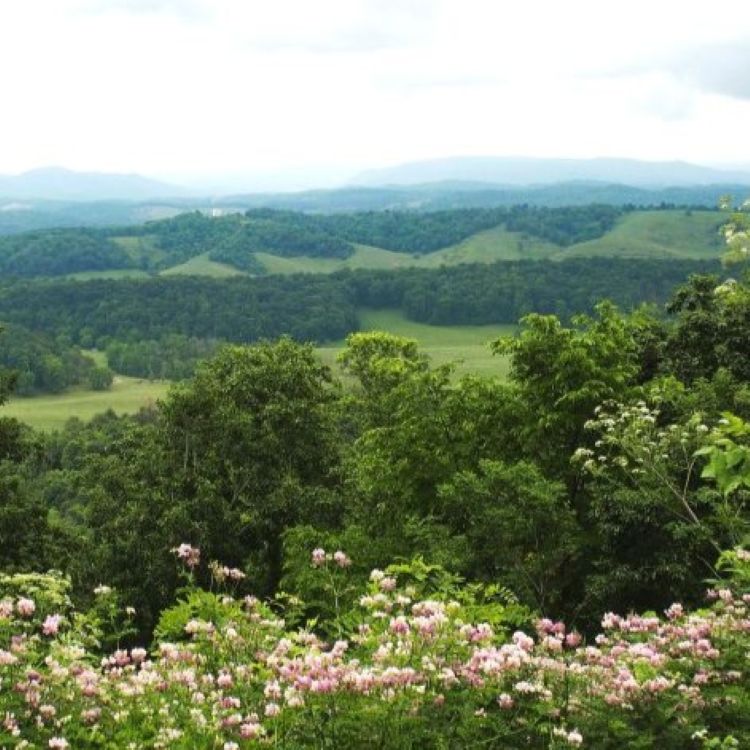
Walter and I were traveling south on U.S. Highway 11 one summer afternoon on our way to Wytheville, Virginia, to attend to some business. About sixty miles south of Roanoke, we drove through the town of Pulaski, where the highway merges with I-81. But right before it does, it winds up Draper Mountain, and suddenly we were on a sightseeing adventure. At the top of the mountain, we discovered an overlook to our right with a view of Pulaski and the surrounding landscape. To our left was an overlook of Draper’s Valley.

The panoramic view of the lush Draper’s Valley and robust Blue Ridge Mountains is a photographer’s dream, and hiking trails on the mountain create a nature-lover’s paradise. Colorful wildflowers adorn the overlook area and take you up intriguing rock steps leading to remnants of a house once occupied on this historical site.


In addition to the stunning view, we were reminded of the story of settlers John Draper and his wife, Bettie, along with his sister, Mary Draper Ingles, her husband, William, and their two children, who lived in nearby Draper’s Meadow. In 1755, during the French and Indian War, a band of Shawnee warriors attacked the Draper settlement, known today as the Draper’s Meadow Massacre. Six settlers were captured, including Bettie and Mary with her children. They were forced to walk 600 miles north to the Shawnee village at the confluence of the Ohio and Scioto Rivers in Ohio country. The women’s husbands, John and Will, attempted to follow them but lost the trail and were forced to abandon their search.
The Shawnee tribe took Mary’s two children into the tribe to raise them as their own. After two and a half months in captivity, Mary escaped with another woman. They slipped away from the tribe and headed south through dense forests and rugged mountains, following the rivers to return to Virginia. There are numerous tales of their arduous 43-day trek of extreme hardship, near starvation, and exposure to the elements as they found their way back to Draper’s Meadow.
After six years of searching, John Draper found his wife, Bettie, living with the family of an Indian chief. He paid for her release, and they returned to the New River Valley in Virginia. In 1765, they moved into a log cabin in the area still known as Draper’s Valley.
Walter and I basked in the beauty and history of Draper’s Valley that day, but when we were leaving, we learned something I’m glad we didn’t know when we arrived. Another visitor to the overlook told us Draper Mountain is closed from time to time due to the prolific bear population in the area. Well—I’m glad we chose a slow-bear day!


Leave a Reply to Dee Cancel reply